
living languages
The product thesis is built on a language landscape far wider than the small set most AI systems are trained to support well.
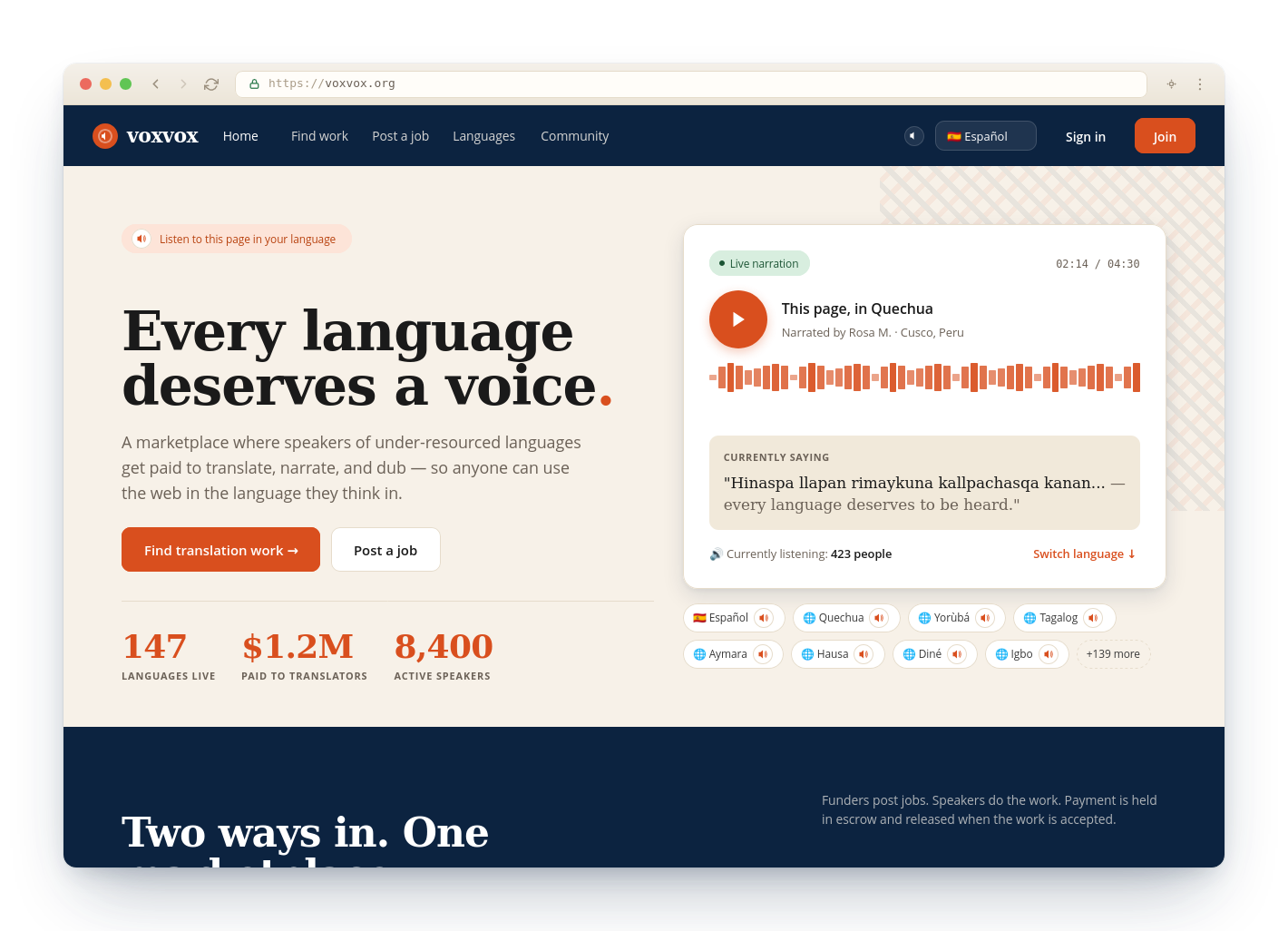
VoxVox is a marketplace for under-resourced languages where speakers get paid to translate, narrate, transcribe, review, and context-check work with consent, provenance, and cross-border payout rails built in.
This page is built from the first product repo, the VoxVox pitch materials, and the local prototype database supplied alongside the draft.

Founder story
VoxVox is not framed as language nostalgia. It is infrastructure for people whose language knowledge has value but whose market access, payment access, and legal leverage are thin or missing.
The strongest narrative in the source material begins with Ailine's grandmother, an Otomi speaker, and turns quickly into the commercial gap: speakers still have the words, buyers still need the work, but there is no consent-first market that connects them cleanly.
"My grandmother spoke Otomi. VoxVox is for the people who still have the words, and a reason to say them out loud."
Why now
The product thesis is built on a language landscape far wider than the small set most AI systems are trained to support well.
Language loss is not abstract. It means the next generation may never be paid for knowledge that still exists today.
VoxVox treats translation, narration, and documentation as paid labor before the knowledge leaves the room forever.
The buyer demand is already real. The missing piece is a trustworthy path to the people who can actually do the work.
How it works
Speaker entry
Source materials describe onboarding that captures language, dialect, region, and modality even when written-language comfort is limited.
Buyer brief
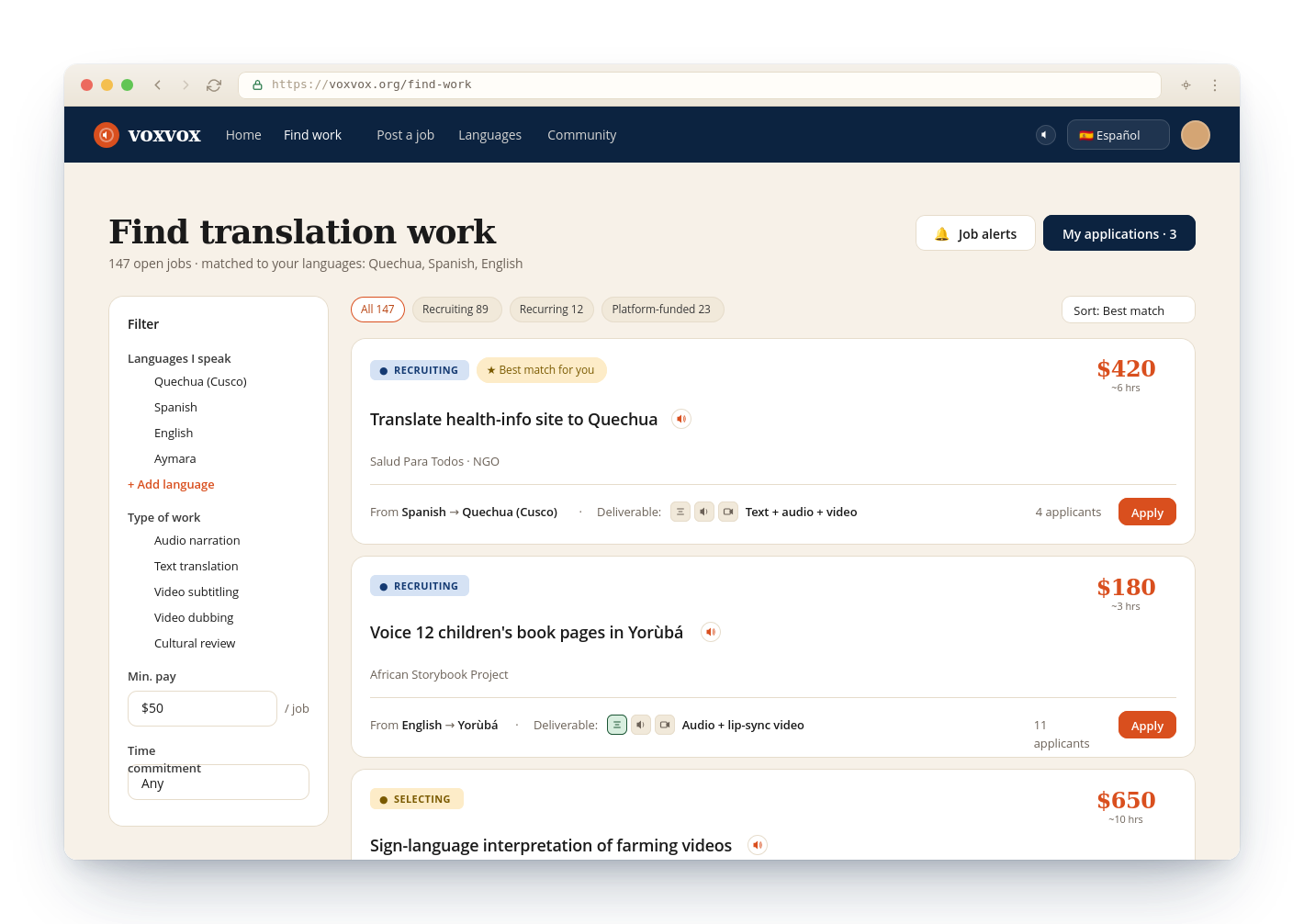
The draft database already includes community notices, worker-rights copy, health messages, cultural art prompts, and oral-history style tasks.
Delivery
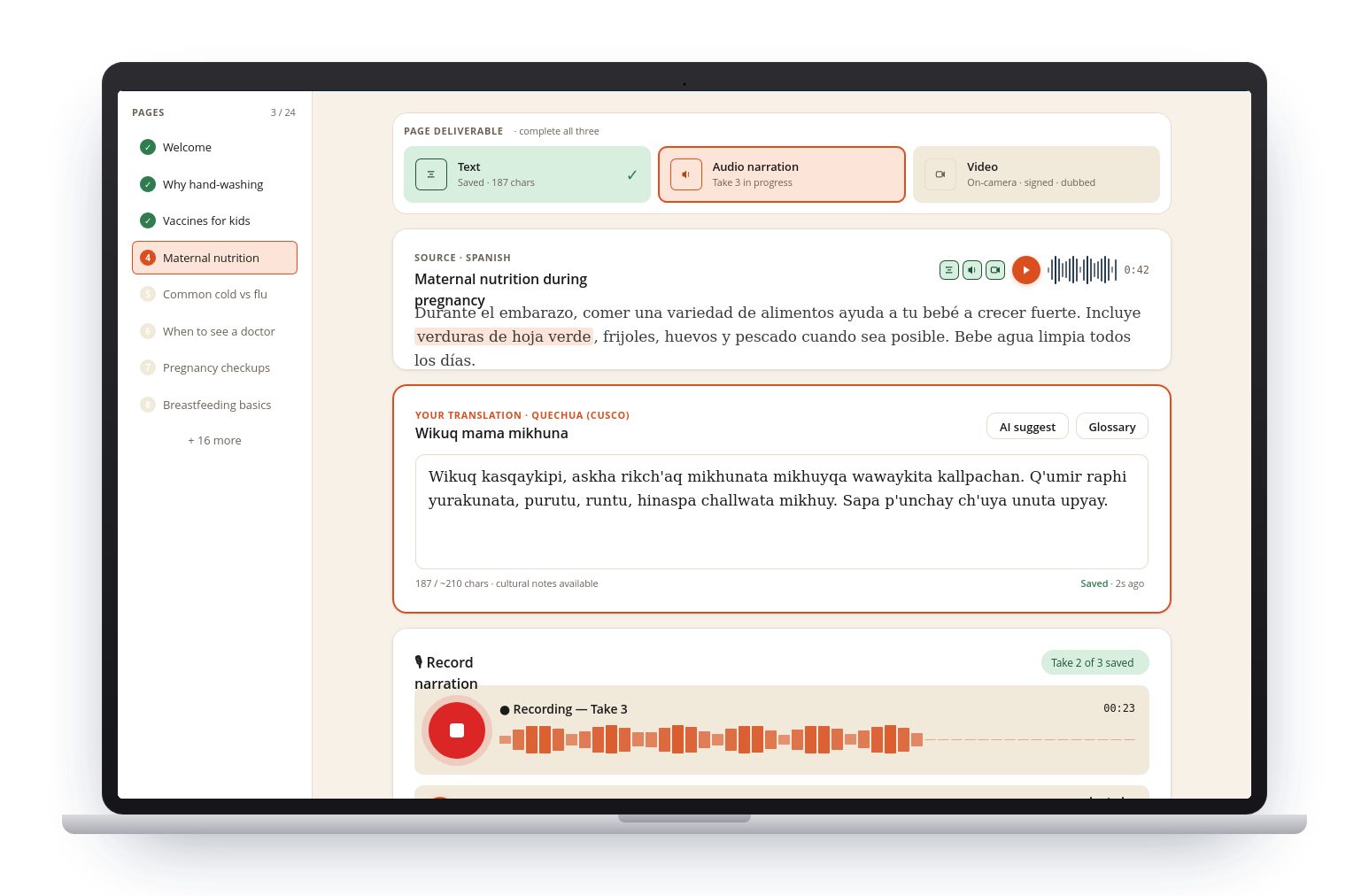
The product model is multimodal by design. A speaker can translate, narrate, record, subtitle, review, or submit context notes in the same workflow.
Trust + payout
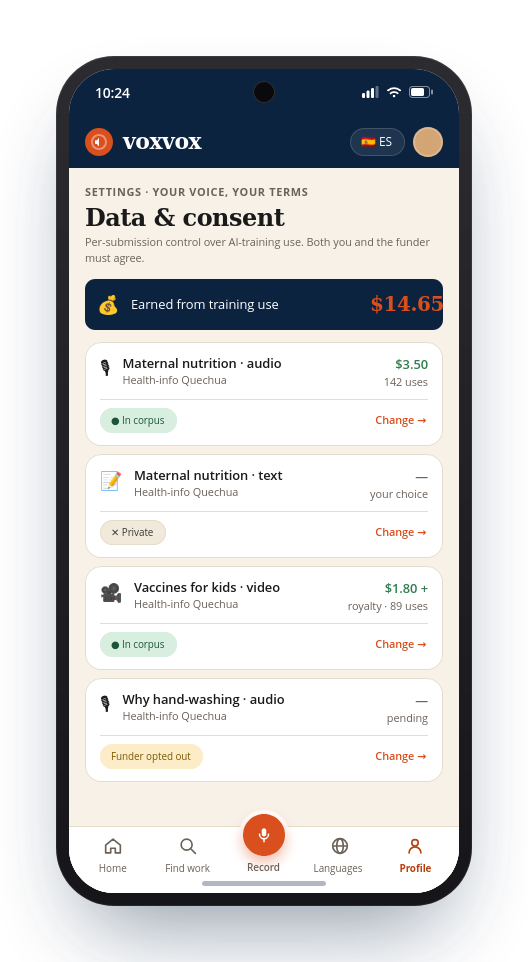
VoxVox positions payment and permission as first-class product layers, not add-ons added after the data has already been taken.
What makes VoxVox different
Self-healing UI
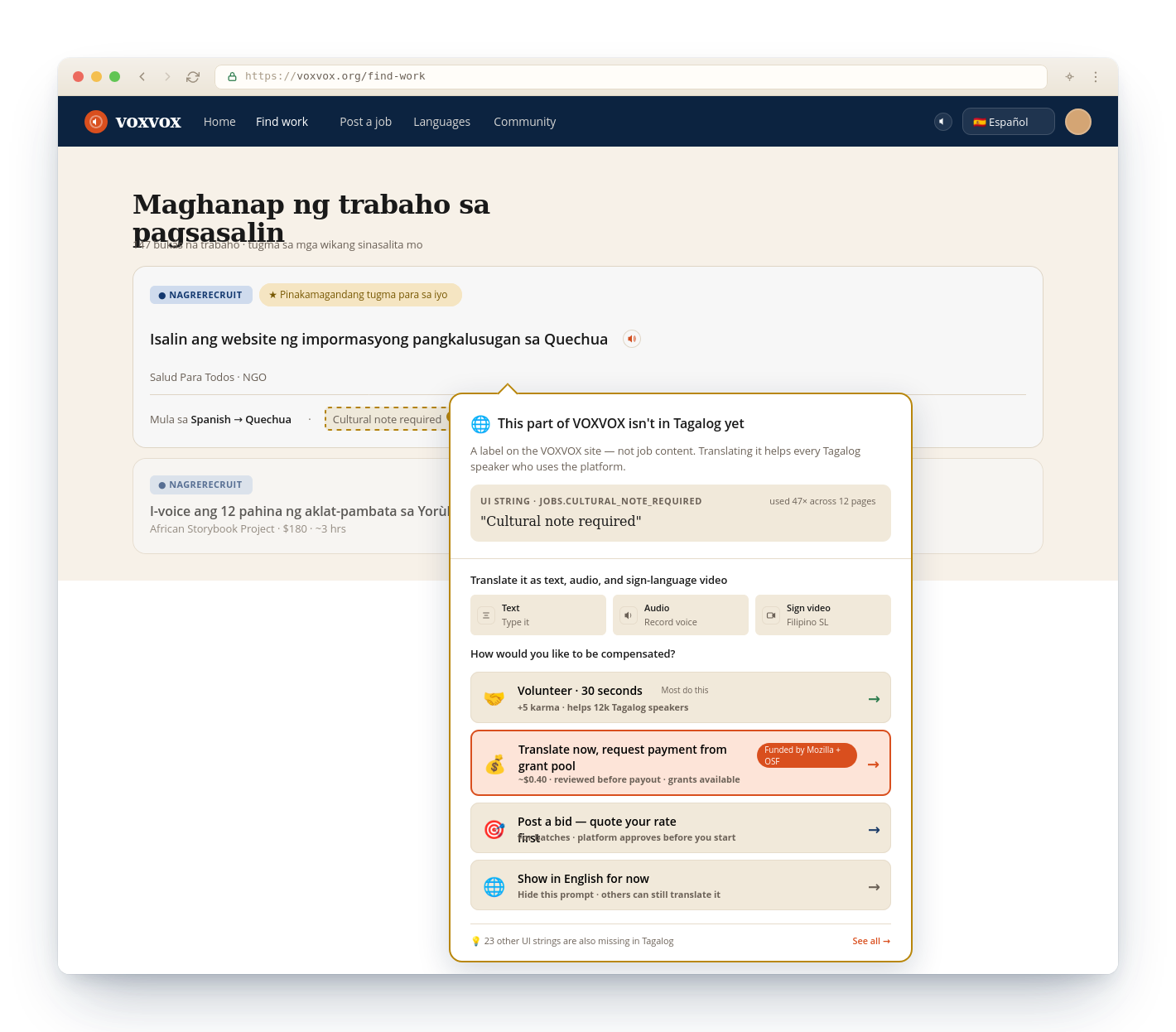
Each new language creates new localization jobs inside the product itself. The interface gets better because speakers are paid to teach it how to grow.
Consent and provenance
The deck materials consistently position permission, reuse settings, and auditable lineage as premium product features buyers will pay for.
Royalties + payout rails
The thesis extends beyond task payment. Speakers can be compensated again when their work is relicensed downstream into higher-value datasets.
Prototype proof
Draft database
11The local SQLite file includes job applications, job submissions, speaker profiles, and payment-related records rather than only marketing copy.
Voice-first UX
69The draft stores translatable interface elements and audio snippets for core navigation and form actions, which is central to the accessibility story.
Payment wiring
7Even at hackathon stage, the system already includes data structures for escrow-style payment continuation, finish steps, and quote handling.
Source set used for this page: the public GitHub draft, the VoxVox pitch-deck materials in this workspace, and the local `db.sqlite3` prototype data supplied with the request.
Who it serves
Speakers
Buyers
Partners
Next step
The draft product is already specific enough to discuss real use cases. The next stage is hardening the platform, validating pilots, and choosing the first production partnerships well.